
Building safer workplaces through nationally aligned compliance training. MedFire delivers clear, practical courses in first aid, fire safety, and workplace risk management — backed by official Australian Codes of Practice and trusted resources.
Explore Resources
(PUAFER001, PUAFER002, PUAFER003, PUAFER004, PUAFER005, PUAFER006, PUAFER007 & PUAFER008)
This course has been developed for individuals who wish to work or who are appointed in the role of Fire Safety Adviser (FSA). It will provide individuals with the relevant knowledge, skills, and abilities required to become an FSA in accordance with the Queensland Building Fire Safety Regulation 2008. This course meets the registration requirements in QLD with QFES for a Fire Safety Advisor.
This course will also equip individuals with the skills and knowledge required to advise on appropriate emergency planning, making them familiar with all aspects of building fire safety on day-to-day matters and during facility emergencies.
A Fire Safety Advisor is required in all high occupancy buildings listed in the Queensland Building Fire Safety Regulation 2008. (High occupancy is classified as: 30 or more employees; a Class 2 or 3 building that is more than 25m in height; or a Class 4 building or an at-risk premise, as nominated by the Commissioner of Queensland Fire and Emergency Services).
The course has been developed to cover a broad range of emergencies and facilities as considered in Australian Standard 3745 and Australian Standard 4083. It applies to employees in the workplace within all industries and in all contexts within Queensland.
Participants in this course will also learn how to effectively:
The following units will be included in your certificate:
This course can be delivered/assessed in the workplace or at facility organised by the training provider.
Course durations can vary for multiple reasons, so the durations below are the minimum possible amount.
Participants must have the physical capacity to use the appropriate equipment and complete assessment tasks, including commanding, controlling and coordinating of facility emergency response procedures.
Individuals undertaking this course will be expected to complete both written and practical assessment tasks.
The units have the following recommended renewal periods:
| Unit | Period |
|---|---|
| PUAFER001 - Identify, prevent and report potential facility emergency situations | Not applicable |
| PUAFER002 - Ensure facility emergency prevention procedures, systems and processes are implemented | Not applicable |
| PUAFER003 - Manage and monitor facility emergency procedures, equipment and other resources | Not applicable |
| PUAFER004 - Respond to facility emergencies | Not applicable |
| PUAFER005 - Operate as part of an emergency control organisation | Not applicable |
| PUAFER006 - Lead an emergency control organisation | Not applicable |
| PUAFER007 - Manage an emergency control organisation | Not applicable |
| PUAFER008 - Confine small emergencies in a facility | Not applicable |
Please note that enrolment to this course is made with Allens Training Pty Ltd RTO 90909. Please refer to the student handbook located on the RTO website (https://allenstraining.com.au/students/student-handbook) for all details relating to rights and responsibilities including complaints and appeals.
Performance tasks:
Documentation:
Case Studies:
Theory assessment:
A written assessment consisting of multiple-choice and short answer questions. The student must complete all assessment questions.
Students are required to complete a self evaluation against the following core skills as part of the enrolment process. This will allow your trainer to understand any additional support that may be required during the course delivery and assessment.
Please contact for pricing

(PUAFER001, PUAFER002, PUAFER004, PUAFER005, PUAFER006 & PUAFER008)
This course has been developed for individuals who wish to work or who are appointed in a Facility Fire Safety role. The identified units of competency are industry standard for individuals who are members of an ECO including chief wardens, deputy chief wardens, communications officers, individuals required to make decisions about the safety of occupants during a facility emergency, and individuals who are required to give instructions on the priority order for responding to an emergency incident and conclude the facility emergency incident.
This course will equip individuals with the skills and knowledge required to have first attack firefighting skills, including preparing for emergency situations, identifying and assessing an emergency, safely confining emergencies, using initial response equipment and reporting on the facility's emergency response. The course has been developed to cover a broad range of emergencies and facilities as considered in Australian Standard 3745 and Australian Standard 4083.
Participants in this course will also learn how to effectively:
The following units will be included in your certificate:
This course can be delivered/assessed in the workplace or at facility organised by the training provider.
Course durations can vary for multiple reasons, so the durations below are the minimum possible amount.
Participants must have the physical capacity to use the appropriate equipment and complete assessment tasks, including commanding, controlling and coordinating of facility emergency response procedures.
Individuals undertaking this course will be expected to complete both written and practical assessment tasks.
The units have the following recommended renewal periods:
| Unit | Period |
|---|---|
| PUAFER001 - Identify, prevent and report potential facility emergency situations | Not applicable |
| PUAFER005 - Operate as part of an emergency control organisation | Not applicable |
| PUAFER002 - Ensure facility emergency prevention procedures, systems and processes are implemented | Not applicable |
| PUAFER006 - Lead an emergency control organisation | Not applicable |
| PUAFER004 - Respond to facility emergencies | Not applicable |
| PUAFER008 - Confine small emergencies in a facility | Not applicable |
Please note that enrolment to this course is made with Allens Training Pty Ltd RTO 90909. Please refer to the student handbook located on the RTO website (https://allenstraining.com.au/students/student-handbook) for all details relating to rights and responsibilities including complaints and appeals.
Performance tasks:
Documentation:
Case Studies:
Theory assessment:
A written assessment consisting of multiple-choice and short answer questions. The student must complete all assessment questions
Students are required to complete a self evaluation against the following core skills as part of the enrolment process. This will allow your trainer to understand any additional support that may be required during the course delivery and assessment.
Please contact for pricing

(PUAFER001, PUAFER004 & PUAFER008)
This program has been designed for members of an Emergency Planning Committee (EPC) or a person required to manage problems and resolve issues in relation to the organisation’s facility emergency prevention process and emergency control structures.
It covers the skills and knowledge required to be ‘emergency aware’ in their facility allowing them to identify and where possible prevent the development of facility emergency situations. Participants will also learn how to manage and monitor facility emergency prevention and control structures for a complex facility or a defined group of facilities such as a building, structure, or workplace as specified in Australian Standard AS 3745-2010 and AS 4083-2010. It also includes preparing for emergency situations, identifying and assessing an emergency, safely confining emergencies, using initial response equipment and reporting on the facility's emergency response.
All aspects of this course will be undertaken in accordance with legislative requirements, organisational policies and procedures and accepted safe practices.
The following units will be included in your certificate:
This course can be delivered/assessed in the workplace or at facility organised by the training provider.
Course durations can vary for multiple reasons, so the durations below are the minimum possible amount.
Participants must have the physical capacity to complete all practical demonstrations. This includes wearing suitable identification, assisting occupants and using communications systems and initial response equipment.
Online study: Students must have access to a computer, smartphone, tablet or other electronic device with access to the internet to complete the online/pre-course studies.
Individuals undertaking this course will be expected to complete both written and practical assessment tasks.
The units have the following recommended renewal periods:
| Unit | Period |
|---|---|
| PUAFER001 - Identify, prevent and report potential facility emergency situations | Not applicable |
| PUAFER004 - Respond to facility emergencies | Not applicable |
| PUAFER008 - Confine small emergencies in a facility | Not applicable |
Please note that enrolment to this course is made with Allens Training Pty Ltd RTO 90909. Please refer to the student handbook located on the RTO website ( https://allenstraining.com.au/students/student-handbook ) for all details relating to rights and responsibilities including complaints and appeals.
Performance tasks:
Documentation:
Theory assessment:
A written assessment consisting of multiple-choice and short answer questions. The student must complete all assessment questions
Students are required to complete a self evaluation against the following core skills as part of the enrolment process. This will allow your trainer to understand any additional support that may be required during the course delivery and assessment.
Please contact for pricing
(PUAFER005, PUAFER006, PUAFER008 & CPPFES2005)
This course has been designed for individuals who are required to implement an emergency response as specified in the facility emergency procedures or directed by a person at a higher level in the Emergency Control Organisation (ECO). These individuals may also be required to make decisions about the safety of facility occupants during an emergency, give instructions on the priority order for responding to an emergency incident, and act as the primary liaison with emergency services.
The course applies to individuals working within the command, control, and coordination structure of the ECO, including roles such as chief wardens, deputy chief wardens, and communications officers. It includes pre-emergency planning, taking appropriate actions in an emergency, assisting with post-emergency activities, and concluding the facility emergency incident.
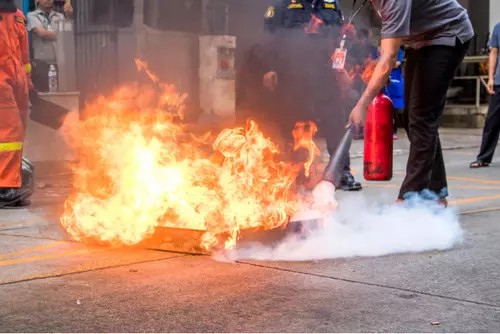
Furthermore, the course develops the skills and knowledge required to confine small emergencies in a facility and equips participants with first attack firefighting skills. Participants will learn to prepare for emergency situations, identify and assess emergencies, safely confine emergencies, use initial response equipment, and report on the facility's emergency response.
Small emergencies in a facility include incidents such as small fires that can be controlled using a fire extinguisher, chemical spills that can be managed using facility personal protective equipment and a spill kit, or vehicle accidents with no significant injury or damage.
The course has been developed to cover a broad range of emergencies and facilities as considered in Australian Standard 3745-2010 and Australian Standard 4083-2010. It applies to employees in the workplace within all industries and in all contexts.
The following units will be included in your certificate:
This course can be delivered/assessed in the workplace or at facility organised by the training provider.
Course durations can vary for multiple reasons, so the durations below are the minimum possible amount.
An individual undertaking this course with Allens Training Pty Ltd will need to demonstrate the following to be eligible for entry:
Online study options: The online learning program can be found in the student portal. Students must have access to a computer, smart phone, tablet or other electronic device with access to the internet to complete the online studies and practical assessment.
Individuals undertaking this course will be expected to complete both written and practical assessment tasks.
The units have the following recommended renewal periods:
| Unit | Period |
|---|---|
| PUAFER005 - Operate as part of an emergency control organisation | Not applicable |
| PUAFER006 - Lead an emergency control organisation | Not applicable |
| PUAFER008 - Confine small emergencies in a facility | Not applicable |
| CPPFES2005 - Demonstrate first attack firefighting equipment | Not applicable |
Please note that enrolment to this course is made with Allens Training Pty Ltd RTO 90909. Please refer to the student handbook located on the RTO website ( https://allenstraining.com.au/students/student-handbook ) for all details relating to rights and responsibilities including complaints and appeals.
Performance tasks:
Documentation:
Theory assessment:
A written assessment consisting of case studies and multiple-choice questions.
Students are required to complete a self evaluation against the following core skills as part of the enrolment process. This will allow your trainer to understand any additional support that may be required during the course delivery and assessment.
Please contact for pricing

(PUAFER005 & PUAFER006)
Commonly referred to as the Warden and Chief Warden course, these units apply to individuals who may be required to make decisions about the safety of occupants of a facility during an emergency and to give instructions on the priority order for responding to an emergency incident, including command, control and coordination of facility emergency response procedures and concluding the facility emergency incident. They may also be required to act as the primary liaison with emergency services. Individuals who undertake this role will generally be members of an Emergency Control Organisation (ECO), acting as chief wardens, deputy chief wardens and communications officers.
The course has been developed to cover a broad range of emergencies and facilities as considered in Australian Standard 3745 and Australian Standard 4083. It applies to employees in the workplace within all industries and in all contexts.
Participants in this course will also learn how to effectively:
The following units will be included in your certificate:
This course can be delivered/assessed in the workplace or at facility organised by the training provider.
Course durations can vary for multiple reasons, so the durations below are the minimum possible amount.
Participants must be able to complete the practical demonstrations for the course, including wearing suitable identification, assisting occupants, using communications systems, commanding, controlling and coordination of facility emergency response procedures.
Pre-course study: Students may be required to undertake online pre-course work prior to attending the face to face session depending on the course delivery mode.
Online study: Students must have access to a computer, smartphone, tablet or other electronic device with access to the internet to complete the online/pre-course studies.
Individuals undertaking this course will be expected to complete both written and practical assessment tasks.
The units have the following recommended renewal periods:
| Unit | Period |
|---|---|
| PUAFER005 - Operate as part of an emergency control organisation | Not applicable |
| PUAFER006 - Lead an emergency control organisation | Not applicable |
Please note that enrolment to this course is made with Allens Training Pty Ltd RTO 90909. Please refer to the student handbook located on the RTO website ( https://allenstraining.com.au/students/student-handbook ) for all details relating to rights and responsibilities including complaints and appeals.
Assessments conducted during face-to-face training session(s) include:
Performance tasks:
Documentation:
Theory assessment:
A written assessment consisting of multiple-choice and short answer questions. The student must complete all assessment questions
Students are required to complete a self evaluation against the following core skills as part of the enrolment process. This will allow your trainer to understand any additional support that may be required during the course delivery and assessment.
Please contact for pricing

(PUAFER005 & PUAFER008)
Commonly referred to as the Warden and Extinguisher Use course, these units have been designed for individuals who are required to implement an emergency response as specified in the facility emergency procedures or specified by a person at a higher level in the emergency control organisation (ECO). Individuals who undertake this work will be working within the command, control and coordinate structure of the ECO. It includes undertaking pre-emergency planning, taking appropriate actions in an emergency and assisting with post-emergency activities.
Furthermore, it also involves the skills and knowledge required to confine small emergencies in a facility and it applies to individuals who are required to have first attack firefighting skills. It includes preparing for emergency situations, identifying and assessing an emergency, safely confining emergencies, using initial response equipment and reporting on the facility's emergency response.
Small emergencies in a facility include incidents such as small fires that can be controlled using a fire extinguisher; chemical spills that can be controlled using facility personal protective clothing and equipment and a spill kit; or a vehicle accident where there is no significant injury or damage.
The course has been developed to cover a broad range of emergencies and facilities as considered in Australian Standard 3745 and Australian Standard 4083. It applies to employees in the workplace within all industries and in all contexts.
Participants in this course will also learn how to effectively:
The following units will be included in your certificate:
This course can be delivered/assessed in the workplace or at facility organised by the training provider.
Course durations can vary for multiple reasons, so the durations below are the minimum possible amount.
Participants must have the physical capacity to complete all practical demonstrations. This includes wearing suitable identification, assisting occupants and using communications systems and initial response equipment.
Pre-course study: Students may be required to undertake online pre-course work prior to attending the face to face session depending on the course delivery mode.
Online study: Students must have access to a computer, smartphone, tablet or other electronic device with access to the internet to complete the online/pre-course studies.
Individuals undertaking this course will be expected to complete both written and practical assessment tasks.
The units have the following recommended renewal periods:
| Unit | Period |
|---|---|
| PUAFER005 - Operate as part of an emergency control organisation | Not applicable |
| PUAFER008 - Confine small emergencies in a facility | Not applicable |
Please note that enrolment to this course is made with Allens Training Pty Ltd RTO 90909. Please refer to the student handbook located on the RTO website ( https://allenstraining.com.au/students/student-handbook ) for all details relating to rights and responsibilities including complaints and appeals.
Performance tasks:
Documentation:
Theory assessment:
A written assessment consisting of multiple-choice and short answer questions. The student must complete all assessment questions.
Students are required to complete a self evaluation against the following core skills as part of the enrolment process. This will allow your trainer to understand any additional support that may be required during the course delivery and assessment.
Please contact for pricing

(CPPFES2005)
The course applies to individuals who may be required to have first attack firefighting skills in a range of situations, including community and workplace settings. It includes preparing for incidents such as small fires that can be controlled using a fire extinguisher, a fire blanket or a fire hose reel.
The following unit will be included in your certificate:
This course can be delivered/assessed in the workplace or at facility organised by the training provider.
Course durations can vary for multiple reasons, so the durations below are the minimum possible amount.
An individual undertaking this course with Allens Training Pty Ltd will need to demonstrate the following to be eligible for entry:
Individuals undertaking this course will be expected to complete both written and practical assessment tasks.
This certificate does not require renewal.
Please note that enrolment to this course is made with Allens Training Pty Ltd RTO 90909. Please refer to the student handbook located on the RTO website ( https://allenstraining.com.au/students/student-handbook ) for all details relating to rights and responsibilities including complaints and appeals.
Practical demonstrations:
Theory assessment:
A written exam consisting of multiple choice and short answer questions.
Students are required to complete a self evaluation against the following core skills as part of the enrolment process. This will allow your trainer to understand any additional support that may be required during the course delivery and assessment.
Please contact for pricing

(PUAFER001)
This course applies to a broad range of emergencies and covers the work required before emergency services and/or specialist response team arrives (not including the specific use of equipment to prevent facility emergency situations).
It will provide the skills, knowledge, and most importantly the confidence needed by occupants who are required to be ‘emergency aware’ in their facility, allowing them to identify and where possible prevent the development of facility emergency situations. Participants will also learn how to minimise the consequences of an emergency and how to report if emergency protection systems and/or equipment is compromised.
Specifically, this will include communicating with team members and stakeholders, identifying and reporting situations in a facility that reduce the effectiveness of emergency protection systems and equipment, identifying emergency protection systems and equipment present in a facility and identifying, monitoring and reporting situations that could lead to emergencies in a facility.
All aspects of this course are undertaken in accordance with legislative requirements, organisational policies and procedures and approved safe practices. Facilities are those as specified in Australian Standard 3745 and AS 4083 and are a building, structure or workplace that is, or may be, occupied by people (occupants).
The following unit will be included in your certificate:
This course can be delivered/assessed in the workplace or at facility organised by the training provider.
Course durations can vary for multiple reasons, so the durations below are the minimum possible amount.
Participants must have the physical capacity to complete all practical demonstrations. This includes conducting routine checks and using communications equipment.
Individuals undertaking this course will be expected to complete both written and practical assessment tasks.
This certificate does not require renewal.
Please note that enrolment to this course is made with Allens Training Pty Ltd RTO 90909. Please refer to the student handbook located on the RTO website ( https://allenstraining.com.au/students/student-handbook ) for all details relating to rights and responsibilities including complaints and appeals.
Performance tasks:
Documentation:
Theory assessment:
A written assessment consisting of multiple-choice and short-answer questions.
Students are required to complete a self evaluation against the following core skills as part of the enrolment process. This will allow your trainer to understand any additional support that may be required during the course delivery and assessment.
Please contact for pricing

(PUAFER002)
This course has been developed to cover facilities such as a building, structure or workplace, as specified in Australian Standard (AS) 3745 and AS 4083. All aspects will be undertaken in accordance with legislative requirements, facility policies and procedures and accepted safe work practices.
It applies to individuals supervising occupants of a facility; typically, they will be a general supervisor, who are required to implement facility emergency prevention safety procedures within a facility or a defined group of facilities.
Participants in this course will learn how to effectively:
The following unit will be included in your certificate:
This course can be delivered/assessed in the workplace or at facility organised by the training provider.
Course durations can vary for multiple reasons, so the durations below are the minimum possible amount.
An individual undertaking this course with Allens Training Pty Ltd will need to demonstrate the following to be eligible for entry:
Individuals undertaking this course will be expected to complete both written and practical assessment tasks.
This certificate does not require renewal.
Please note that enrolment to this course is made with Allens Training Pty Ltd RTO 90909. Please refer to the student handbook located on the RTO website ( https://allenstraining.com.au/students/student-handbook ) for all details relating to rights and responsibilities including complaints and appeals.
Performance tasks:
Documentation:
Theory assessment:
A written assessment consisting of multiple-choice and short-answer questions.
Students are required to complete a self evaluation against the following core skills as part of the enrolment process. This will allow your trainer to understand any additional support that may be required during the course delivery and assessment.
Please contact for pricing

(PUAFER003)
If you are members of an Emergency Planning Committee (EPC) or a person required to manage problems and resolve issues in relation to the organisation’s facility emergency prevention process and emergency control structures, then this course is a must for you.
It covers the skills and knowledge required to manage and monitor facility emergency prevention and control structures for a complex facility or a defined group of facilities such as a building, structure or workplace, as specified in Australian Standard (AS) 3745 and AS 4083.
All aspects of this course will be undertaken in accordance with legislative requirements, organisational policies and procedures and accepted safe practices.
Participants in this course will learn how to effectively:
The following unit will be included in your certificate:
This course can be delivered/assessed in the workplace or at facility organised by the training provider.
Course durations can vary for multiple reasons, so the durations below are the minimum possible amount.
An individual undertaking this course with Allens Training Pty Ltd will need to demonstrate the following to be eligible for entry:
Individuals undertaking this course will be expected to complete both written and practical assessment tasks.
This certificate does not require renewal.
Please note that enrolment to this course is made with Allens Training Pty Ltd RTO 90909. Please refer to the student handbook located on the RTO website ( https://allenstraining.com.au/students/student-handbook ) for all details relating to rights and responsibilities including complaints and appeals.
Performance tasks:
Documentation:
Theory assessment:
A written assessment consisting of multiple-choice and short-answer questions.
Students are required to complete a self evaluation against the following core skills as part of the enrolment process. This will allow your trainer to understand any additional support that may be required during the course delivery and assessment.
Please contact for pricing

(PUAFER004)
If you are an occupant who is required to be ‘emergency aware’ in a facility, then this course is a must for you.
It covers the skills and knowledge required by occupants in a facility such as a building, structure, or workplace, as specified in Australian Standard (AS) 3745 and AS 4083 to recognise and report emergencies, respond to emergency warnings and advice, and to take appropriate action during an emergency such as choosing the most appropriate course of action and evacuating from a danger area.
All aspects of this course will be undertaken in accordance with legislative requirements, organisational policies and procedures and accepted safe practices.
Participants in this course will also learn how to effectively:
The following unit will be included in your certificate:
This course can be delivered/assessed in the workplace or at facility organised by the training provider.
Course durations can vary for multiple reasons, so the durations below are the minimum possible amount.
An individual undertaking this course with Allens Training Pty Ltd will need to demonstrate the following to be eligible for entry:
Individuals undertaking this course will be expected to complete both written and practical assessment tasks.
This certificate does not require renewal.
Please note that enrolment to this course is made with Allens Training Pty Ltd RTO 90909. Please refer to the student handbook located on the RTO website ( https://allenstraining.com.au/students/student-handbook ) for all details relating to rights and responsibilities including complaints and appeals.
Performance tasks:
Theory assessment:
A written assessment consisting of multiple-choice and short-answer questions.
Students are required to complete a self evaluation against the following core skills as part of the enrolment process. This will allow your trainer to understand any additional support that may be required during the course delivery and assessment.
Please contact for pricing
(PUAFER005)
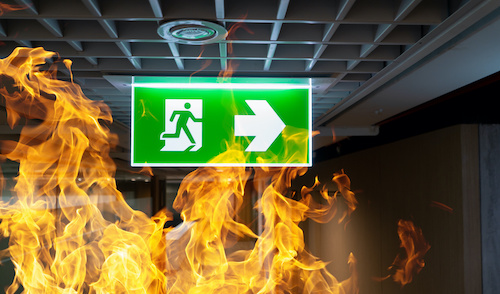
Commonly referred to as the Fire Warden course, this unit has been designed for individuals who are required to implement an emergency response as specified in the facility emergency procedures or specified by a person at a higher level in the emergency control organisation (ECO). Individuals who undertake this work will be working within the command, control and coordinate structure of the ECO.
It includes undertaking pre-emergency planning, taking appropriate actions in an emergency, and assisting with post-emergency activities. It applies to members of an ECO who are floor or area wardens and/or wardens or deputy wardens.
The course has been developed to cover a broad range of emergencies and facilities as considered in Australian Standard 3745 and Australian Standard 4083. It applies to employees in the workplace within all industries and in all contexts.
Participants in this course will learn how to effectively:
The following unit will be included in your certificate:
This course can be delivered/assessed in the workplace or at facility organised by the training provider.
Course durations can vary for multiple reasons, so the durations below are the minimum possible amount.
An individual undertaking this course with Allens Training Pty Ltd will need to demonstrate the following to be eligible for entry:
Individuals undertaking this course will be expected to complete both written and practical assessment tasks.
This certificate does not require renewal.
Please note that enrolment to this course is made with Allens Training Pty Ltd RTO 90909. Please refer to the student handbook located on the RTO website ( https://allenstraining.com.au/students/student-handbook ) for all details relating to rights and responsibilities including complaints and appeals.
Performance tasks:
Documentation:
Theory assessment:
A written assessment consisting of multiple-choice and short answer questions. The student must complete all assessment questions.
Students are required to complete a self evaluation against the following core skills as part of the enrolment process. This will allow your trainer to understand any additional support that may be required during the course delivery and assessment.
Please contact for pricing

(PUAFER006)
Commonly referred to as the Chief Warden course, this unit applies to individuals who may be required to make decisions about the safety of occupants of a facility during an emergency and to give instructions on the priority order for responding to an emergency incident, including command, control and coordination of facility emergency response procedures and concluding the facility emergency incident. They may also be required to act as the primary liaison with emergency services. Individuals who undertake this role will generally be members of an Emergency Control Organisation (ECO), acting as chief wardens, deputy chief wardens, and communications officers.
The course has been developed to cover a broad range of emergencies and facilities as considered in Australian Standard 3745 and Australian Standard 4083. It applies to employees in the workplace within all industries and in all contexts.
Participants in this course will also learn how to effectively:
The following unit will be included in your certificate:
This course can be delivered/assessed in the workplace or at facility organised by the training provider.
Course durations can vary for multiple reasons, so the durations below are the minimum possible amount.
An individual undertaking this course with Allens Training Pty Ltd will need to demonstrate the following to be eligible for entry:
This course has a pre-requisite of PUAFER005 Operate as part of an emergency control organisation which must be completed prior to undertaking this unit of competency.
Individuals undertaking this course will be expected to complete both written and practical assessment tasks.
This certificate does not require renewal.
Please note that enrolment to this course is made with Allens Training Pty Ltd RTO 90909. Please refer to the student handbook located on the RTO website ( https://allenstraining.com.au/students/student-handbook ) for all details relating to rights and responsibilities including complaints and appeals.
Performance tasks:
Documentation – The student must complete the following documentation:
Theory assessment:
A written assessment consisting of multiple-choice and short answer questions. The student must complete all assessment questions.
Students are required to complete a self evaluation against the following core skills as part of the enrolment process. This will allow your trainer to understand any additional support that may be required during the course delivery and assessment.
Please contact for pricing

(PUAFER007)
An ECO's priority is the safety of facility occupants and visitors during an emergency which means ECO members are responsible for pre-emergency, emergency, and post-emergency actions. Careful planning, training, and initiation must take place for this to happen safely and effectively. This is done by an Emergency Planning Committee.
If you are a member of an Emergency Planning Committee, then this course is a must for you.
This course covers the skills and knowledge required by a member of an Emergency Planning Committee to document and maintain a facility emergency plan, to establish and maintain an emergency control organisation, and to operate in accordance with the facility's emergency plan.
It includes initiating emergency response planning, ensuring an emergency control organisation is in place, providing for initiation and control of the initial emergency response, providing for post-initial response activities, and planning and implementing emergency control training and providing support in the post response and/or recovery phase.
All aspects of this course will be undertaken in accordance with legislative requirements, organisational policies and procedures and accepted safe practices. The course has been developed to cover occupants and facilities as specified in Australian Standard (AS) 3745 and AS4083. Occupants are people attending a facility on a permanent or temporary basis such as an employee, contractor, student, or resident, but not a visitor or patient. A facility is a building, structure, or workplace that is, or may be, occupied by people (occupants).
The following unit will be included in your certificate:
This course can be delivered/assessed in the workplace or at facility organised by the training provider.
Course durations can vary for multiple reasons, so the durations below are the minimum possible amount.
An individual undertaking this course with Allens Training Pty Ltd will need to demonstrate the following to be eligible for entry:
Individuals undertaking this course will be expected to complete both written and practical assessment tasks.
This certificate does not require renewal.
Please note that enrolment to this course is made with Allens Training Pty Ltd RTO 90909. Please refer to the student handbook located on the RTO website ( https://allenstraining.com.au/students/student-handbook ) for all details relating to rights and responsibilities including complaints and appeals.
Performance tasks:
Documentation:
Theory assessment:
A written assessment consisting of multiple-choice and short answer questions. The student must complete all assessment questions.
Students are required to complete a self evaluation against the following core skills as part of the enrolment process. This will allow your trainer to understand any additional support that may be required during the course delivery and assessment.
Please contact for pricing

(PUAFER008)
This course covers the skills and knowledge for preparing for emergency situations, identifying and assessing an emergency, safely confining emergencies, using initial response equipment, and reporting on the facility's emergency response.
If you are an occupant of a facility who is required to have first attack firefighting skills for small emergencies, such as small fires that can be controlled using a fire extinguisher; chemical spills that can be controlled using facility personal protective clothing and equipment and a spill kit; or a vehicle accident where there is no significant injury or damage, then this course is a must for you.
All aspects of this course will be undertaken in accordance with legislative requirements, organisational policies and procedures and accepted safe practices including those covered in Australian Standard (AS) 3745 and AS4083 for facilities and occupants.
Occupants are people attending a facility on a permanent or temporary basis such as an employee, contractor, student or resident, but not a visitor or patient. A facility is a building, structure or workplace that is, or may be, occupied by people (occupants).
Participants in this course will also learn how to effectively:
The following unit will be included in your certificate:
This course can be delivered/assessed in the workplace or at facility organised by the training provider.
Course durations can vary for multiple reasons, so the durations below are the minimum possible amount.
Participants must have the physical capacity to complete all practical demonstrations, such as being able to safely confine emergencies using initial response equipment.
Pre-course study: Students may be required to undertake online pre-course work prior to attending the face to face session depending on the course delivery mode.
Online study: Students must have access to a computer, smartphone, tablet or other electronic device with access to the internet to complete the online/pre-course studies.
Individuals undertaking this course will be expected to complete both written and practical assessment tasks.
This certificate does not require renewal.
Please note that enrolment to this course is made with Allens Training Pty Ltd RTO 90909. Please refer to the student handbook located on the RTO website ( https://allenstraining.com.au/students/student-handbook ) for all details relating to rights and responsibilities including complaints and appeals.
Performance tasks:
Documentation:
Theory assessment:
A written assessment consisting of multiple-choice and short answer questions. The student must complete all assessment questions.
Students are required to complete a self evaluation against the following core skills as part of the enrolment process. This will allow your trainer to understand any additional support that may be required during the course delivery and assessment.
Please contact for pricing
(PUAFIR207)
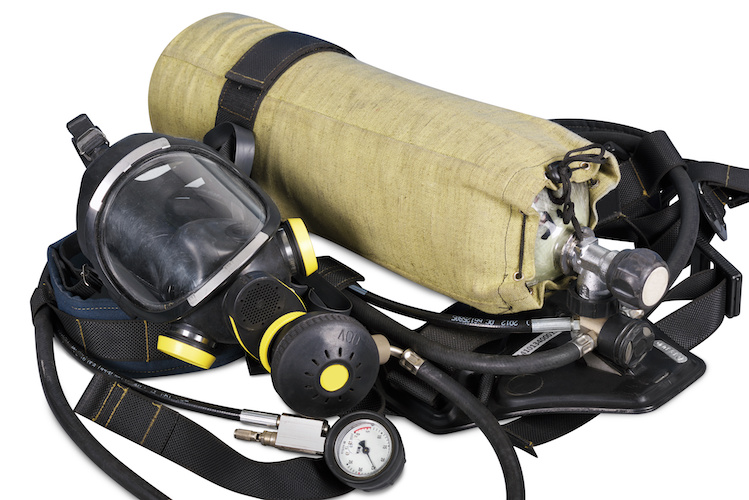
This course has been designed for individuals who are required to wear breathing apparatus in a hazardous atmosphere, usually in the fire sector. This unit will cover working in a variety of hazardous environments and managing situations such as exhaustion of air supply, entrapment, and malfunctioning equipment as a member of a team.
This unit covers the skills and knowledge required to select, conduct pre-donning checks and tests on breathing apparatus, operate and maintain breathing apparatus and equipment in a hazardous atmosphere, and conclude operations as defined by the Australian Standard AS/NZS 1715:2009 Selection, use and maintenance of respiratory protective equipment.
Students will be required to hold the pre-requisite unit PUAFIR210 Prevent injury (for individuals undertaking training related to the fire sector as well as individuals undertaking RII30719 Certificate III in Emergency Response and Rescue).
The following unit will be included in your certificate:
This course can be delivered/assessed in the workplace or at facility organised by the training provider.
Course durations can vary for multiple reasons, so the durations below are the minimum possible amount.
An individual undertaking this course with Allens Training Pty Ltd will need to demonstrate the following to be eligible for entry:
* The fire sector is those sections of government departments, statutory authorities or organisations that have responsibility under jurisdictional arrangements for the delivery of firefighting and fire management services.
Individuals undertaking this course will be expected to complete both written and practical assessment tasks.
This certificate does not require renewal.
Please note that enrolment to this course is made with Allens Training Pty Ltd RTO 90909. Please refer to the student handbook located on the RTO website ( https://allenstraining.com.au/students/student-handbook ) for all details relating to rights and responsibilities including complaints and appeals.
Performance tasks and practical scenarios:
Documentation:
Theory assessment:
A written assessment consisting of multiple-choice and short answer questions. The student must complete all assessment questions.
Students are required to complete a self evaluation against the following core skills as part of the enrolment process. This will allow your trainer to understand any additional support that may be required during the course delivery and assessment.
Please contact for pricing

(PUAFIR210)
This course is designed as an introduction to safe work practices and is specifically relevant to a workplace requiring personnel to be involved in incidents, prescribed burns and/or operational aspects of emergency management.
This course applies to individuals who are required to identify and avoid workplace hazards and risks, to maintain personal safety and to report identified issues to supervisors and team members. It includes identifying, implementing, and monitoring the effectiveness of workplace hazards and risk control procedures.
The unit applies to personnel who work as a member of a team. Work at this level is undertaken under direct supervision and instruction.
The fire sector is those sections of government departments, statutory authorities or organisations that have a responsibility under jurisdictional arrangements for the delivery of firefighting and fire management services.
The skills in this course are applied in accordance with Commonwealth and State/Territory legislation, Australian/New Zealand standards and industry codes of practice.
The following unit will be included in your certificate:
This course can be delivered/assessed in the workplace or at facility organised by the training provider.
Course durations can vary for multiple reasons, so the durations below are the minimum possible amount.
Participants must have the physical capacity to be able to meet the demands of practical demonstration skills.
Individuals undertaking this course will be expected to complete both written and practical assessment tasks.
This certificate does not require renewal.
Please note that enrolment to this course is made with Allens Training Pty Ltd RTO 90909. Please refer to the student handbook located on the RTO website ( https://allenstraining.com.au/students/student-handbook ) for all details relating to rights and responsibilities including complaints and appeals.
Performance tasks:
Documentation:
Theory assessment:
A written assessment consisting of short-answer and multiple-choice questions.
Students are required to complete a self evaluation against the following core skills as part of the enrolment process. This will allow your trainer to understand any additional support that may be required during the course delivery and assessment.
Please contact for pricing
(Non‑Accredited Training)
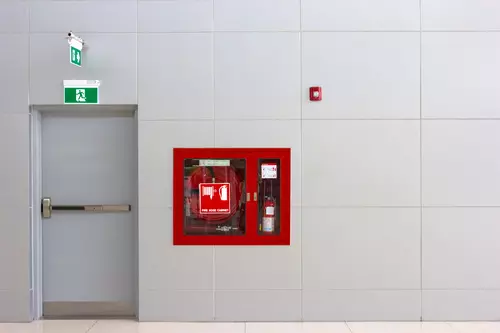
This non-accredited course has been designed for individuals who are required to implement an emergency response as specified in the facility emergency procedures or specified by a person at a higher level in the emergency control organisation (ECO). Individuals who undertake this work will be working within the command, control and coordinate structure of the ECO. It includes undertaking pre-emergency planning, taking appropriate actions in an emergency, and assisting with post emergency activities.
This course also involves the skills and knowledge required to confine small emergencies in a facility and it applies to individuals who are required to have first attack firefighting skills. It includes preparing for emergency situations, identifying and assessing an emergency, safely confining emergencies, using initial response equipment, and reporting on the facility's emergency response.
Small emergencies in a facility include incidents such as small fires that can be controlled using a fire extinguisher; chemical spills that can be controlled using facility personal protective clothing and equipment and a spill kit; or a vehicle accident where there is no significant injury or damage.
A Certificate of Participation will be issued for:
This course can be delivered/assessed in the workplace or at a facility organised by the training provider.
Course durations can vary for multiple reasons, so the durations below are the minimum possible amount.
There are no entry requirements for this course.
Individuals undertaking this course will be expected to complete practical assessment tasks.
This certificate does not require renewal.
Please note that enrolment to this course is made with Allens Training Pty Ltd RTO 90909. Please refer to the student handbook located on the RTO website ( https://allenstraining.com.au/students/student-handbook ) for all details relating to rights and responsibilities including complaints and appeals.
Please contact for pricing

(Non‑Accredited Training)
This course provides individuals with a practical understanding of fire safety processes and procedures. The course has been developed to cover a broad range of emergencies and facilities as considered in Australian Standard 3745 and Australian Standard 4083. It teaches individuals to be emergency aware and how to effectively respond to emergencies to contribute to a safer environment at work and in the community.
By completing this course, students will gain a basic understanding of:
A Certificate of Participation will be issued for:
This course is delivered fully online through interactive, self‑paced learning modules.
Course durations can vary for multiple reasons, so the durations below are the minimum possible amount.
This certificate does not require renewal.
Please note that enrolment to this course is made with Allens Training Pty Ltd RTO 90909. Please refer to the student handbook located on the RTO website ( https://allenstraining.com.au/students/student-handbook ) for all details relating to rights and responsibilities including complaints and appeals.
$55 inc GST

(Non‑Accredited Training)
This course is designed for Fire Wardens who need to refresh their knowledge of fire safety procedures, regulations, and their role within an Emergency Control Organisation (ECO). The course has been developed to cover a broad range of emergencies and facilities as considered in Australian Standard 3745 and Australian Standard 4083. Stay up to date with best practices and enhance your ability to respond effectively in an emergency.
By completing this course, students will gain a basic understanding of:
A Certificate of Participation will be issued for:
This course is delivered fully online through interactive, self‑paced learning modules.
Course durations can vary for multiple reasons, so the durations below are the minimum possible amount.
This certificate does not require renewal.
Please note that enrolment to this course is made with Allens Training Pty Ltd RTO 90909. Please refer to the student handbook located on the RTO website ( https://allenstraining.com.au/students/student-handbook ) for all details relating to rights and responsibilities including complaints and appeals.
$55 inc GST

(Non‑Accredited Training)
This course is designed for Chief Fire Wardens who need to refresh their knowledge of fire safety regulations and their leadership role within an Emergency Control Organisation (ECO). The course has been developed to cover a broad range of emergencies and facilities as considered in Australian Standard 3745 and Australian Standard 4083. It helps individuals to gain the confidence to effectively coordinate emergency responses and ensure workplace safety.
By completing this course, students will gain a basic understanding of:
Please note: This course touches on the contents of the Australian Standards but has not been mapped to fully address all elements of the warden role as part of an Emergency Control Organisation. It is up to individual workplaces to evaluate if this is sufficient training for the role of a Warden based on their risks and emergency procedure manual.
Please note: This course touches on the contents of the Australian Standards but has not been mapped to fully address all elements of the Chief Warden role as part of an Emergency Control Organisation. It is up to individual workplaces to evaluate if this is sufficient training for the role of a Chief Warden based on their risks and emergency procedure manual.
A Certificate of Participation will be issued for:
This course is delivered fully online through interactive, self‑paced learning modules.
Course durations can vary for multiple reasons, so the durations below are the minimum possible amount.
This certificate does not require renewal.
Please note that enrolment to this course is made with Allens Training Pty Ltd RTO 90909. Please refer to the student handbook located on the RTO website ( https://allenstraining.com.au/students/student-handbook ) for all details relating to rights and responsibilities including complaints and appeals.
$70 inc GST
Access free official resources to support MedFire’s fire safety training.